What this job involves and what it costs
Downlight and spotlight installation, including parts, labour and any required certification, typically costs £300–£500 per room. Serving Gravesham and surrounding areas (townwide and nearby villages). Work is offered with a fixed written price, compliant, certified installations and a guarantee on workmanship.
The property mix in Gravesham — 1930s semis and post-war estates in Gravesend's suburbs, village stock in Meopham and Cobham, riverside Victorian terraces in Northfleet — means no two jobs are alike. Our electricians spend much of their time on mixed suburban and village stock, off-gas-grid electric heating in the villages, EV chargers on suburban driveways, and we plan each visit around the age of the wiring rather than a one-size-fits-all checklist.
When you need it
- Your ceiling lights buzz or flicker when you turn on an appliance (like the kettle).
-
This usually means the circuit is strained, there may be bean connections, or aging wiring that needs checking.
-
Some downlights or spotlights are getting so hot they’ve discoloured the ceiling or trim.
-
This normally indicates improper fittings, poor ventilation or incompatible bulbs/fixtures that are overheating.
-
A light trips the breaker or a fuse blows whenever certain fittings are on.
-
That often points to a faulty fixture, a short-circuit or an overloaded circuit that needs investigation.
-
A fitting near your shower, bath or basin looks damp, rusty or has started to fail.
-
This usually means the light isn’t rated for wet locations or the protective earthing/zoning isn’t correct.
-
New or moved recessed lights sit flush against insulation or insulation is pushed up against them.
-
That can cause overheating and reduced ventilation; the insulation needs clearing or a protective cover fitted.
-
Old lights have scorched or brown marks around terminals or on the ceiling.
-
This commonly shows bean or overheated connections and should be inspected for fire safety.
-
Some fittings are unreliable or only work intermittently.
-
This usually means a bean connection, worn switch, or failing fixture that needs repair or replacement.
-
You want brighter task lighting over worktops in the kitchen because the single central light leaves shadows.
-
This typically means the current layout isn’t suitable—additional focused lighting or repositioning is recommended.
-
You’re planning to add or move recessed lights and aren’t sure how they affect fire safety.
-
That usually requires checking ceiling fire-rating rules and using appropriate fire-rated housings when needed.
-
Your house is older and cables or light fittings look aged or brittle.
- That often means the wiring should be inspected and possibly replaced before adding modern LED fittings.
What it costs in Gravesham
Typical costs in Gravesham for installing LED downlights and related electrical work are shown below; you'll receive a fixed written price before work starts. Prices include parts, installation, testing, certification and VAT where stated.
| Job | Price | What's included |
|---|---|---|
| 6–8 LED downlights, per room | £300–£500 | Compliant fittings, labour, electrical testing and certification, VAT |
| Extra socket | £55–£75 | Supply and installation of one additional socket |
| Fault finding | £80/hour | Diagnostic time to locate electrical faults |
Not included: decorative finishes, plaster making-good, painting, asbestos removal, scaffold, access equipment and DNO supply-upgrade charges.
What is involved on the day
On the day, we’ll confirm the survey details, isolate the relevant circuit and verify it is dead before work begins. We’ll install your downlights or spotlights to the agreed layout, using suitable fire-rated fittings and cable protection where required. We’ll then test the circuit and provide the appropriate electrical certificate for the completed work.
Survey and isolation
Before fitting any downlights or spotlights, we survey the room, confirm the proposed positions and check ceiling voids for joists, insulation, pipework and existing cables. We assess access above the ceiling, identify heat-sensitive materials and consider whether the proposed layout meets practical lighting requirements without compromising the building fabric.
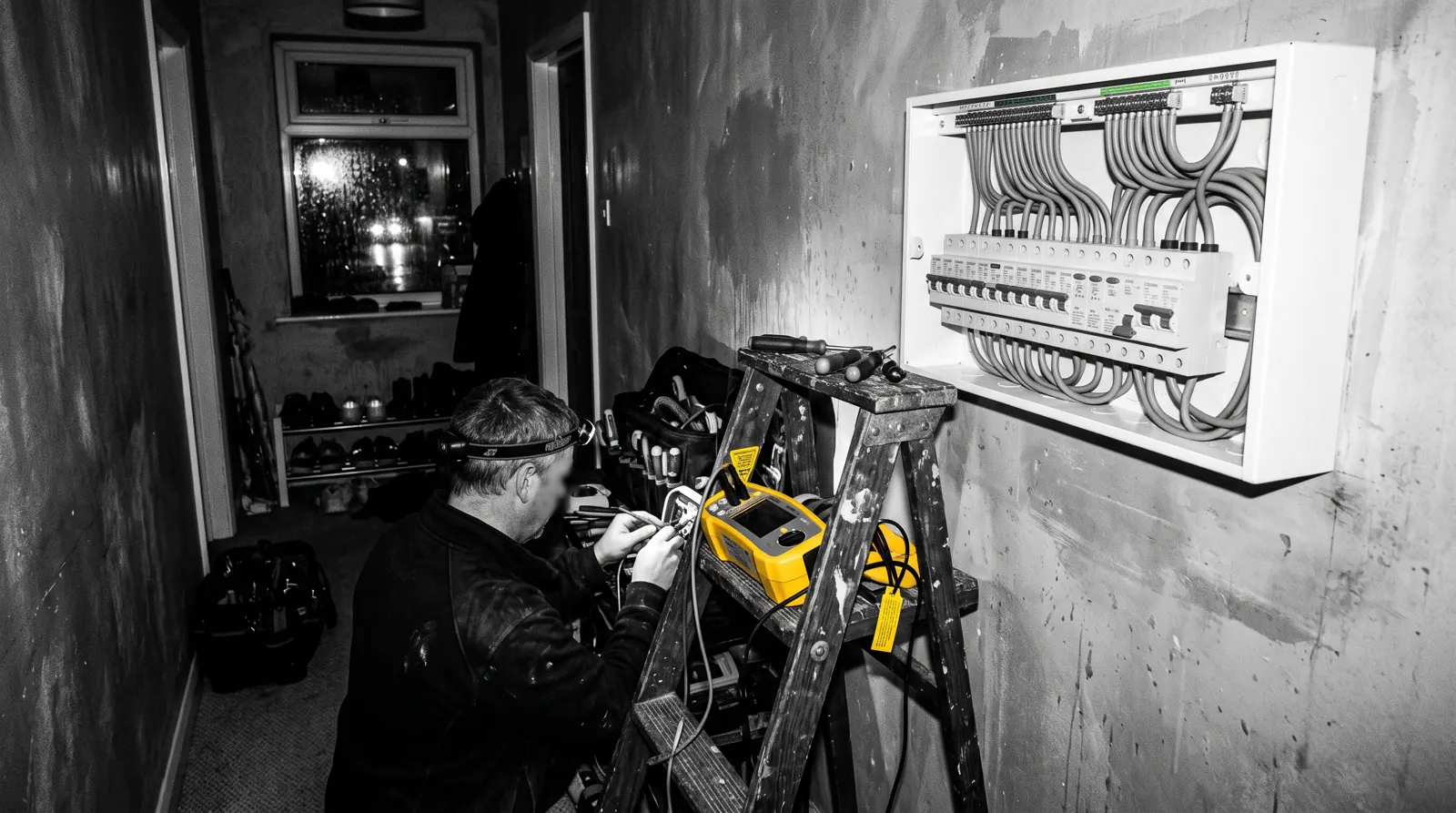
We carry out cable tracing where concealed wiring may be present, particularly in older Gravesham properties with altered circuits or historic cable types. Before any electrical work begins, we isolate the relevant circuit at the consumer unit, secure it against reconnection and complete isolation verification using suitable test equipment. We prove the tester before and after testing, confirm dead conductors at the point of work, and check for shared neutrals or unexpected feeds. This controlled process protects you, our electricians and the existing installation.
Installation
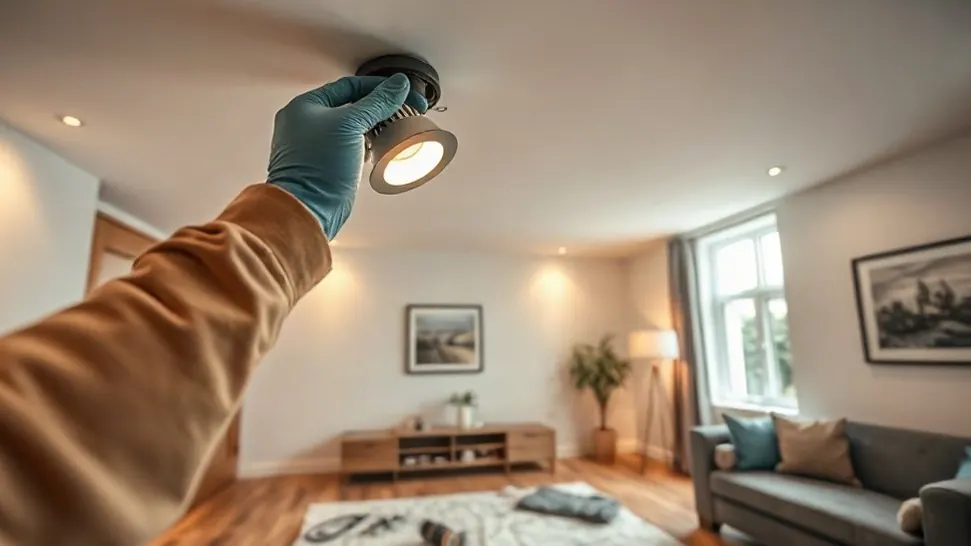
Once isolation is confirmed, we mark the approved positions, cut each ceiling aperture to the manufacturer’s specified size and fit suitable fire-rated, IP-rated or insulation-coverable downlights where the location requires them. We protect floors and furnishings, check for concealed services and maintain required clearances from insulation, joists and combustible materials. LED placement is set out to provide even task or ambient illumination without creating glare, shadows or over-lighting. We select Beam angles to suit ceiling height, room use and fitting spacing, particularly over worktops, bathrooms and circulation areas. Each fitting is secured in accordance with its instructions, with compatible connections, enclosures and strain relief where needed. For existing wiring, we assess cable condition and suitability before connection, especially in older Gravesham properties. We leave ceiling openings neat and guarantee fittings sit flush, aligned and accessible for future maintenance.
Testing
After installation, we test each downlight circuit to confirm correct polarity, earthing, continuity, insulation resistance and protective-device operation before energising it. This safety testing verifies that cabling, connections, switches and fittings are secure and suitable for use. We check that the circuit’s RCD protection disconnects within the required parameters, where fitted, and confirm that no exposed conductive parts present a fault risk.
We then carry out load testing with all new fittings operating, including dimming controls where installed. This confirms stable illumination, correct switching, compatible dimmer performance and no overheating, flicker or nuisance tripping. We inspect fire-rated downlights for correct seating against the ceiling and guarantee insulation has not compromised their manufacturer-required clearance. If existing wiring shows concerns, such as aged rubber, VIR or aluminium conductors, we’ll explain the issue before leaving.
Certificate
Every completed downlight or spotlight installation is inspected, tested and documented in line with Part P requirements. We verify circuit continuity, insulation resistance, polarity, earth-fault loop impedance and RCD operation before energising the fittings. We also confirm that fire-rated units, intumescent seals and ceiling penetrations maintain fire safety where required.
During the certification process, we record the circuit details, protective device ratings, test results and any alterations at the consumer unit. You’ll receive the appropriate electrical certificate for the work, with clear information for future maintenance or an electrical audit. This documentation supports your property’s compliance history and shows that the installation has been assessed against current safety standards. If we identify an existing defect affecting the new lighting circuit, we’ll explain it before completion and recommend the necessary remedial work.
Options and what we recommend
For most Gravesham homes, we recommend fire-rated, dimmable LED downlights with IP-rated fittings in bathrooms and other wet areas, specified to suit the ceiling void, insulation and existing wiring. We’ll assess cable condition carefully, particularly in Victorian properties with older VIR or rubber insulation and post-war homes where aluminium wiring may be present. LED zoning lets you separate task, ambient and feature lighting without overloading a circuit.
| Area | Recommended option |
|---|---|
| Kitchen | Dimmable fire-rated LEDs, zoned |
| Bathroom | IP-rated, dimmable fittings |
Choose warm-white for living spaces and neutral-white for practical areas. Trim styles include white, black, brushed chrome and adjustable gimbal units for artwork or angled ceilings. We’ll select enclosed-rated fittings where insulation covers the fitting, maintain manufacturer clearances, and use suitably rated dimming controls. This provides safe heat management, consistent light output and straightforward future lamp replacement.
Rules and certificates
The right fitting is only part of a compliant installation. We will check whether the downlight or spotlight work is notifiable under Part P of the Building Regulations — for example, new circuits, consumer‑unit replacements and some work in bathrooms or other special locations often are notifiable. Where the work is notifiable and carried out by a Part P‑registered electrician (such as an NICEIC-approved operative), they can self‑certify and notify Building Control; if the installer is not Part P‑registered you will usually need to arrange and pay for Building Control inspection or a competent person scheme notification.
We will issue the appropriate paperwork: an Electrical Installation Certificate (EIC) for a new circuit, or a Minor Electrical Installation Works Certificate for qualifying additions to an existing circuit. These records help demonstrate that electrical work was carried out and tested, which is relevant to fire safety, insurance enquiries and property records. Before energising the installation we will assess bathroom zoning, circuit protection, earthing and testing requirements. Keep certificates safely, as they provide evidence of the work for future alterations, insurance purposes or when selling the property.
Older homes around Gravesham
In Gravesham and its immediate neighbourhoods we take a location-specific approach to downlights and spotlights. In the pre‑war semi‑detached houses found in suburbs such as Bean and Istead Rise, which were largely built in the 1920s and 1930s, we check for early ring or radial circuits and assess circuit capacity and protective devices relevant to that stock.
Ceilings in Gravesham’s older buildings demand methods suited to local construction. In the lime‑plastered and lath‑and‑plaster ceilings of terraced cottages around Shorne and the town centre (many dating from the 1800s), drilling can cause cracking and bean keys and create concealed voids; in those areas we choose cutting methods and fire‑rated fittings designed not to compromise the original ceiling fabric. All work we carry out in Gravesham is tested, certified and, where applicable under Part P of the Building Regulations for properties in this area, notified to the local authority.
How long it takes and whether you lose power
Most downlight or spotlight installations in Gravesham take one day per room, although the programme depends on ceiling access, the number of fittings and the condition of the existing circuit. We’ll inspect the circuit, confirm cable condition and plan positions before cutting ceilings, helping protect both safety and Lighting aesthetics.
Circuit downtime is usually limited to the affected lighting circuit while we isolate, install, test and reconnect fittings. If safe isolation requires work at the consumer unit, we may need a short wider shutdown; we’ll explain this beforehand. We don’t energise new fittings until polarity, earth continuity, insulation resistance and functional testing are satisfactory. Fire-rated fittings are fitted to manufacturer instructions, with suitable connections and enclosure clearances. Where older wiring, including rubber, VIR or aluminium conductors, shows defects, we’ll pause and advise on compliant remedial work before proceeding.